WhatsRap Album Review | Memphis, Tennessee | 1995
In 1995, the hip-hop world was paying attention to New York and Los Angeles.
Nas had changed the game with Illmatic. Wu-Tang Clan were building an empire. Mobb Deep had delivered The Infamous. On the West Coast, Dr. Dre and Snoop Dogg had helped turn G-funk into a phenomenon.
But somewhere in Memphis, Tennessee, something entirely different was happening.
Something darker.
Something dirtier.
Something that sounded like it had been recorded in the basement of a haunted house.
That sound belonged to Three 6 Mafia.
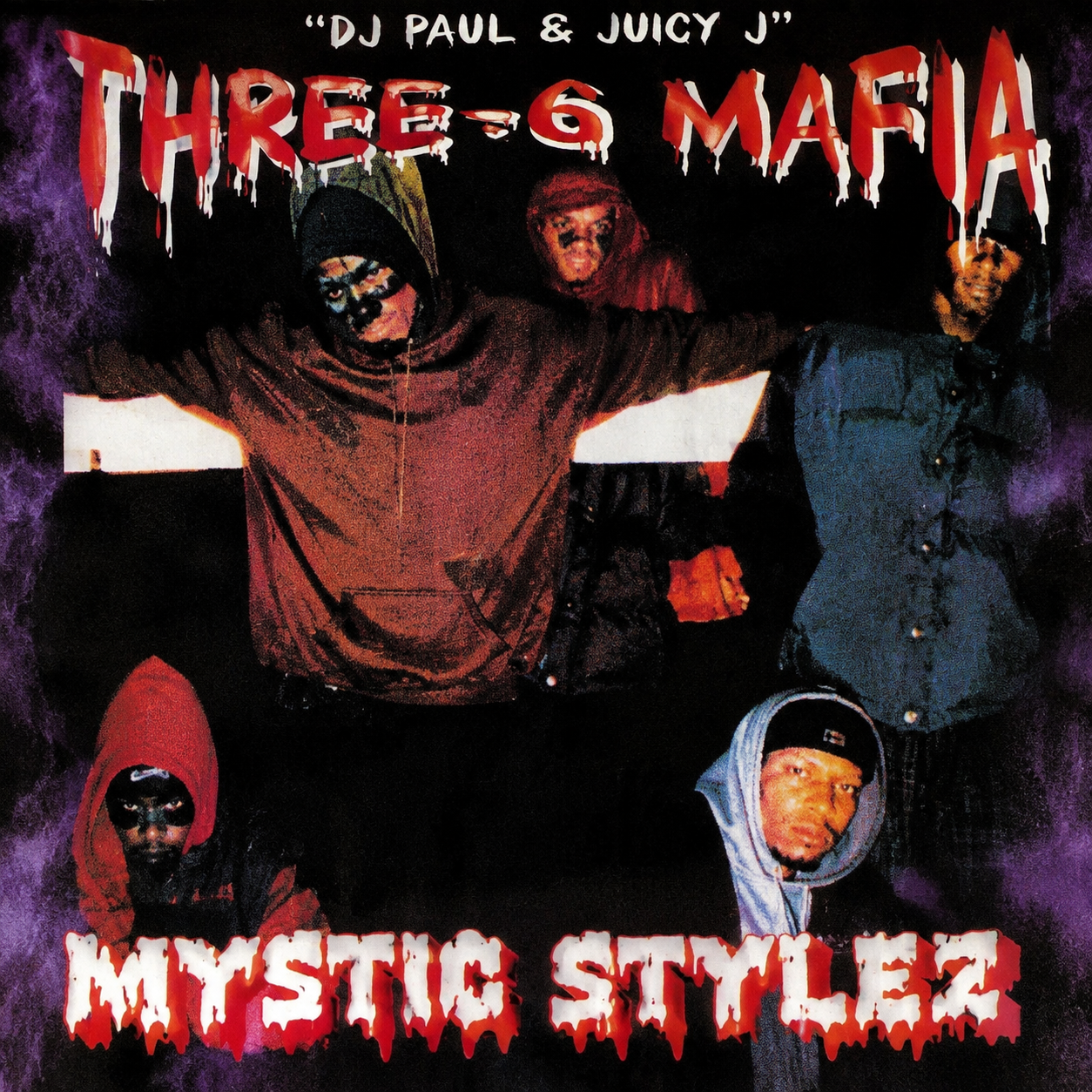
And the album was called Mystic Stylez.
More than three decades later, it remains one of the most important underground rap albums of the 1990s.
But is it actually as good as its reputation suggests?
At WhatsRap, we believe Mystic Stylez is more than an influential album. It’s a genuinely great record — and one of the most distinctive listening experiences in Southern hip-hop history.
Here’s why.
Memphis Had Its Own Sound
To understand Mystic Stylez, you have to understand the environment it came from.
In the early 1990s, Memphis already had a thriving underground rap scene built around cassette tapes, local DJs and independent artists.
While mainstream hip-hop was dominated by coastal sounds, Memphis producers were developing something unmistakably their own.
Heavy 808 bass.
Dark synthesizers.
Distorted vocal samples.
Hypnotic repetition.
And drums that seemed designed to shake the entire trunk of a car.
Artists and producers including DJ Squeeky and DJ Zirk were part of this movement, while DJ Paul and Juicy J developed their own increasingly recognizable production style.
It wasn’t polished.
It wasn’t designed for mainstream radio.
And that was part of its appeal.
When Three 6 Mafia released Mystic Stylez through Prophet Entertainment in 1995, the group brought that underground atmosphere into a complete album.
The result was unlike almost anything happening in mainstream rap at the time.
DJ Paul and Juicy J: The Real Architects
Let’s start with what makes this album special.
The production.
DJ Paul and Juicy J produced Mystic Stylez, creating a sound that feels both primitive and remarkably sophisticated.
The beats aren’t complicated in the traditional sense.
Instead, they rely on atmosphere.
A haunting loop repeats until it becomes almost hypnotic.
An eerie vocal sample appears in the background.
The bass comes crashing in.
Then a rapper enters with a flow that sounds like another instrument in the production.
It’s a formula that shouldn’t always work.
But on Mystic Stylez, it works extraordinarily well.
The music feels threatening without needing massive orchestral arrangements or expensive studio tricks.
There’s something claustrophobic about the sound.
The drums are raw, the melodies are often minimal, and the vocals frequently blend into the instrumentals.
This is one of those albums where the production creates an entire world.
You don’t simply listen to Mystic Stylez.
You enter it.
And without DJ Paul and Juicy J behind the boards, this album would never have become the underground landmark it is today.
The Rappers: Different Voices, One Dark Identity
Another major strength is the chemistry between the artists.
DJ Paul and Juicy J provide the foundation, but the collective’s identity also depends on voices such as Lord Infamous, Koopsta Knicca, Gangsta Boo and Crunchy Black.
And then there are the contributions from affiliated Memphis rappers, including Playa Fly and Kingpin Skinny Pimp.
Each brings something different.
Lord Infamous
Lord Infamous is arguably the most fascinating voice on the album.
His rapid, intricate delivery and dark imagination make him sound almost supernatural over these beats.
There’s something captivating about the way his flow twists around the drums.
He doesn’t sound like a typical East Coast lyricist.
He doesn’t sound like a West Coast gangsta rapper.
He sounds unmistakably Memphis.
Koopsta Knicca
Koopsta Knicca brings a different type of darkness.
His delivery can feel ghostly, almost detached from the beat, before suddenly becoming more aggressive.
That contrast is one of the reasons the album remains so unsettling.
Gangsta Boo
And we cannot discuss early Three 6 Mafia without recognizing Gangsta Boo.
Her fierce delivery and commanding presence helped define the group’s identity.
She was never simply a supporting voice.
She belonged in that lineup.
Her contributions are also an important reminder of how much women helped shape the sound and culture of Memphis rap.
Together, these personalities make Mystic Stylez feel like a collective rather than a collection of unrelated verses.
Break da Law ’95: The Perfect Introduction
After the opening, “Break da Law ’95” immediately establishes what you’re dealing with.
The beat is dark.
The atmosphere is tense.
The delivery is aggressive.
There’s nothing inviting or radio-friendly about it.
And that’s exactly why it’s such a strong opening statement.
The track introduces the listener to Three 6 Mafia’s world without compromise.
It feels raw, dangerous and completely committed to its sound.
If someone wants to understand the original Three 6 Mafia aesthetic, “Break da Law ’95” is one of the first tracks they should hear.
Da Summa: The Album’s Unexpected Masterpiece
Here’s where Mystic Stylez becomes truly interesting.
Because not everything on this album sounds like a horror movie.
“Da Summa” is one of its greatest moments precisely because it shows another side of the group.
The production is smoother, warmer and more reflective.
There’s still something slightly eerie beneath the surface, but the track creates a completely different atmosphere.
It’s almost nostalgic.
A Memphis summer captured through a hypnotic instrumental and laid-back performances.
And honestly, this is one of the records that makes the strongest case for DJ Paul and Juicy J as genuinely versatile producers.
They didn’t need darkness and aggression to create something memorable.
They could produce atmosphere in several different ways.
For many longtime fans, “Da Summa” remains one of the finest songs in the group’s catalog.
It’s easy to understand why.
WhatsRap standout: “Da Summa” is one of the album’s most replayable tracks.
Live by Yo Rep: No Apologies
“Live by Yo Rep (Bone Dis)” represents the confrontational side of Memphis rap.
Built around a dispute with Bone Thugs-N-Harmony, the track is hostile, intense and full of the dark imagery that defined Three 6 Mafia’s early material.
It’s a fascinating document of the period.
But what really stands out is how the vocal styles interact with the production.
The rapid deliveries and menacing instrumental create an almost overwhelming atmosphere.
This isn’t simply a diss record.
It’s a demonstration of the group’s aggressive musical identity.
And Lord Infamous is particularly effective in this setting.
Now I’m Hi, Pt. 3: Hypnotic Memphis Rap
One of the most distinctive aspects of early Memphis hip-hop was its use of repetitive vocal phrases.
“Now I’m Hi, Pt. 3” demonstrates exactly why that approach was so effective.
The track feels hypnotic.
The hook becomes part of the beat.
The verses move around the production rather than fighting against it.
It’s the sort of song that reveals how closely the group’s vocal style was connected to DJ Paul and Juicy J’s production.
Repetition isn’t just filling space.
It’s creating momentum.
And that approach would become increasingly important in Southern rap over the following decades.
Tear da Club Up: A Glimpse Into the Future
If you want to hear the connection between Three 6 Mafia’s underground beginnings and the later rise of crunk, listen to “Tear da Club Up.”
The energy is relentless.
The chanting is aggressive.
The bass is punishing.
This is music designed to provoke a physical reaction.
Years before the group’s bigger mainstream success, the foundations of its future sound were already present.
“Tear da Club Up” is one of the clearest examples.
And the original version has a rawness that later, more polished recordings simply cannot recreate.
That’s what makes it special.
It sounds dangerous.
It sounds spontaneous.
And it sounds like Memphis.
Mystic Styles: Pure Horrorcore Atmosphere
The album’s title track, “Mystic Styles,” takes the group’s fascination with darkness to another level.
The beat is ominous.
The performances are theatrical.
And the overall atmosphere feels closer to a psychological horror soundtrack than a conventional rap record.
This is where the album’s horrorcore identity becomes impossible to ignore.
But there’s an important difference between simply using shocking lyrics and creating genuinely unsettling music.
Three 6 Mafia understood that difference.
The production does much of the work.
Even before you focus on the lyrics, the instrumental establishes the mood.
And once the vocals enter, everything becomes more intense.
This is the type of sound that helped make Mystic Stylez a cult classic.
What Doesn’t Work?
Now, let’s be fair.
Mystic Stylez isn’t a perfect album.
At over 70 minutes, it can feel lengthy.
Some tracks rely on very similar production patterns, and the repetitive hooks that make the record hypnotic can occasionally become exhausting.
The rough mixing is central to its identity, but it also means certain vocals don’t always stand out clearly.
And some of the violent, sexual and occult imagery feels more interested in provocation than saying anything particularly meaningful.
That’s worth acknowledging.
Not every track delivers the same musical depth as “Da Summa.”
Not every performance is equally memorable.
And listeners accustomed to cleaner arrangements may find the album difficult to get into.
But here’s the interesting part.
Removing too much of that roughness would also remove part of what makes Mystic Stylez so distinctive.
Its imperfections are not automatically strengths.
Yet they are deeply connected to its character.
This isn’t an album that needs to sound expensive.
It needs to sound authentic to the underground world it came from.
And it does.
Why Mystic Stylez Changed Hip-Hop
Perhaps the most remarkable thing about Mystic Stylez is how much influence it gained after its initial release.
In 1995, Three 6 Mafia weren’t competing commercially with the biggest mainstream artists.
This was independent Southern hip-hop.
A local movement creating its own identity.
But over time, elements of that sound spread far beyond Memphis.
The heavy 808s.
The dark melodies.
The repeated vocal chants.
The rapid-fire flows.
The hypnotic hooks.
You can hear connections between this musical approach and later developments in crunk, trap and underground rap.
Artists and movements associated with A$AP Mob, Raider Klan and the darker corners of internet rap have helped bring renewed attention to this era of Memphis music.
Of course, Three 6 Mafia didn’t invent every element of modern trap or horrorcore.
And they weren’t the only artists building Memphis’ underground sound.
But Mystic Stylez is one of the clearest examples of how those ideas came together into something powerful and enduring.
The album’s legacy isn’t just that other artists borrowed from it. It’s that its entire approach to atmosphere, rhythm and repetition still feels relevant.
The Best Tracks on Mystic Stylez
Our essential selections:
- Da Summa — The atmospheric masterpiece.
- Break da Law ’95 — Raw, aggressive Memphis rap.
- Tear da Club Up — A blueprint for the group’s future energy.
- Now I’m Hi, Pt. 3 — Hypnotic and unmistakably Southern.
- In da Game — One of the album’s strongest displays of collective chemistry.
- Mystic Styles — The darkest side of the record.
- Live by Yo Rep (Bone Dis) — Pure underground hostility.
And don’t sleep on “Long Nite” or “Back Against da Wall.”
There’s a lot more here than the most frequently discussed tracks.
The WhatsRap Verdict
Rating: 9/10
What makes Mystic Stylez special isn’t perfection. It’s identity.
There were technically cleaner albums in 1995.
There were bigger commercial releases.
And there were plenty of rappers receiving more attention from the mainstream hip-hop press.
But very few records sounded like this.
DJ Paul and Juicy J built an atmosphere that remains instantly recognizable.
Lord Infamous, Koopsta Knicca, Gangsta Boo and the rest of the collective gave that sound a personality unlike anything else.
And the album helped establish Memphis as a place with an unmistakable musical identity.
It’s dark.
It’s hypnotic.
It’s sometimes excessive.
And it’s occasionally rough around the edges.
But it’s also innovative, memorable and enormously influential.
Mystic Stylez is not just a Three 6 Mafia classic. It’s a cornerstone of underground Southern hip-hop.
If you’re serious about understanding where modern rap got some of its darkest and most hypnotic ideas, this album deserves a place in your collection.
WhatsRap Rating: 9/10 — An Underground Essential.
What’s Your Favorite Mystic Stylez Track?
Now we want to hear from the real Memphis rap fans.
Is Mystic Stylez the greatest Three 6 Mafia album?
Do you prefer the darker underground years or the group’s later, more polished releases?
And which song do you keep coming back to?
“Da Summa”?
“Break da Law ’95”?
“Tear da Club Up”?
Or something completely different?
Drop your favorite track and your personal rating in the comments below.
Real hip-hop. Real stories. No compromise.