November 7, 1995, wasn’t just another release date in hip-hop history.
It was the day GZA, also known as The Genius, released Liquid Swords — an album that would become one of the defining masterpieces of the Wu-Tang Clan’s legendary solo era.
Released through Geffen Records and produced primarily by RZA, the record combined chilling production, razor-sharp lyricism, martial arts imagery and some of the most memorable guest appearances in Wu-Tang history.
On November 7, 2026, Liquid Swords celebrated its 31st anniversary.
More than three decades later, the question isn’t whether Liquid Swords is a classic.
The question is whether anyone has ever truly managed to recreate its atmosphere.
The Darkest Corner of the Wu-Tang Universe
By 1995, Wu-Tang Clan had already changed hip-hop.
Enter the Wu-Tang (36 Chambers) had introduced the world to nine extraordinary personalities, while Method Man’s Tical and Raekwon’s Only Built 4 Cuban Linx… demonstrated the enormous potential of the group’s solo projects.
But GZA approached things differently.
Where Method Man brought charisma and an unpredictable flow, and Raekwon delivered cinematic street narratives, GZA relied on precision.
His delivery was calm, calculated and almost emotionless.
Every word seemed carefully chosen.
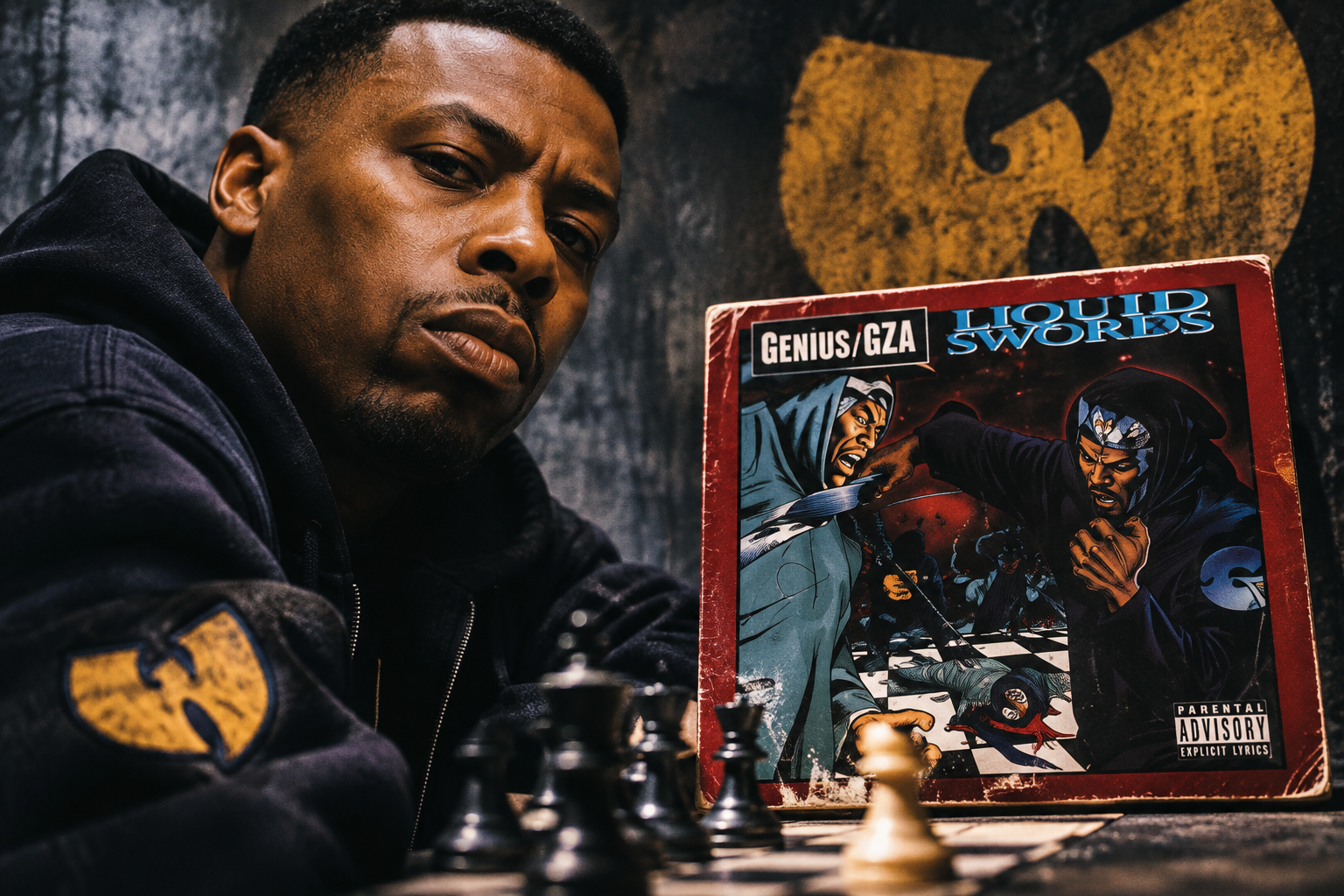
Every verse felt like another move in a chess match.
And with RZA behind the boards, Liquid Swords became the perfect environment for that style.
RZA’s Basement: Where the Magic Happened
Much of Liquid Swords was recorded during 1995 at RZA’s basement studio in Staten Island, New York.
The surroundings were modest.
The music was anything but.
RZA created a soundscape built around haunting samples, heavy drums, eerie melodies and an atmosphere that rarely offered listeners a moment of comfort.
What made the production extraordinary wasn’t simply how dark it sounded.
It was how perfectly it complemented GZA’s voice.
Unlike many rappers who rely on aggression or volume, GZA could deliver a devastating verse without ever raising his voice.
RZA understood that.
Instead of overwhelming the lyrics, the production allowed every line to cut through.
The result was an album that felt less like a collection of individual songs and more like a journey into a frozen, dangerous world.
Shogun Assassin, Chess and Street Philosophy
One of the album’s most recognizable elements is its use of dialogue from the martial arts film Shogun Assassin.
The movie samples add a cinematic dimension, connecting GZA’s street narratives to stories of warriors, discipline, violence and survival.
But the connection between hip-hop and martial arts wasn’t simply decorative.
Throughout Liquid Swords, GZA uses language as a weapon.
Chess becomes a metaphor for strategy.
Street life becomes a test of intelligence and survival.
And his lyrics repeatedly explore power, loyalty, corruption and the consequences of difficult decisions.
The album’s famous cover artwork reinforces that identity: sword-wielding warriors battling across a chessboard.
Everything feels connected.
The music, the writing, the artwork and the atmosphere all contribute to the same unmistakable vision.
The Tracks That Made Liquid Swords Legendary
An album can have a brilliant concept and still fail to deliver memorable songs.
Liquid Swords has no such problem.
Liquid Swords
The title track immediately establishes the album’s identity.
Built around haunting production and GZA’s controlled delivery, it sets the tone for everything that follows.
It remains one of the most recognizable opening statements in the Wu-Tang solo catalog.
Cold World
Featuring Inspectah Deck, “Cold World” captures the bleak storytelling that makes the album so powerful.
Its production is chilling, while the lyrics present a world where survival often comes at an enormous cost.
Few tracks better represent the album’s atmosphere.
4th Chamber
Featuring Ghostface Killah, Killah Priest and RZA, “4th Chamber” is one of the album’s most explosive moments.
Its unusual instrumental, aggressive performances and striking chemistry make it an essential Wu-Tang collaboration.
Even among the group’s extraordinary catalog, this track stands apart.
Shadowboxin’
Method Man joins GZA on “Shadowboxin’,” delivering one of the album’s most memorable guest performances.
The contrast between Method Man’s distinctive energy and GZA’s calculated approach works perfectly.
It’s also a reminder of something that made Wu-Tang special: the members didn’t need to sound alike to create incredible music together.
I Gotcha Back
Originally connected to the 1994 film Fresh, “I Gotcha Back” adds another important dimension to the record.
Its storytelling and emotional weight demonstrate that GZA’s talents extended beyond complex metaphors and technical lyricism.
The Genius could also create powerful narratives with remarkable clarity.
And those aren’t the only highlights.
“Duel of the Iron Mic,” “Gold,” “Labels,” “Killah Hills 10304” and “Investigative Reports” all contribute to the album’s reputation.
Even the closing Killah Priest showcase, “B.I.B.L.E. (Basic Instructions Before Leaving Earth),” adds something distinctive to the overall experience.
A Wu-Tang Album That Brought the Clan Together
Although Liquid Swords is unmistakably GZA’s album, it also features contributions from across the Wu-Tang family.
Method Man, Ghostface Killah, Raekwon, Inspectah Deck, RZA, Masta Killa, U-God and Ol’ Dirty Bastard all make appearances, alongside Killah Priest.
But the guests never overshadow the central figure.
This is still GZA’s world.
His writing holds everything together.
The guest appearances feel like carefully chosen additions rather than distractions.
It’s one of the reasons the album succeeds both as an individual artistic statement and as an essential part of Wu-Tang history.
Is Liquid Swords the Greatest Wu-Tang Solo Album?
This debate has been running for decades.
Raekwon’s Only Built 4 Cuban Linx… brought cinematic crime storytelling to extraordinary heights.
Ghostface Killah’s Ironman introduced another unforgettable solo voice.
Method Man’s Tical delivered a raw, unconventional sound that remains deeply influential.
And GZA gave us Liquid Swords.
Each album represents a different side of Wu-Tang’s creative identity.
But when it comes to atmosphere, lyrical precision and consistency, Liquid Swords has an argument that is almost impossible to ignore.
There are very few wasted moments.
RZA’s production remains distinctive.
GZA’s writing still rewards close listening.
And the guest appearances include some of the finest performances of that entire Wu-Tang era.
For many listeners, it’s the definitive Wu-Tang solo masterpiece.
Others will always prefer Only Built 4 Cuban Linx….
That’s what makes the discussion so interesting.
31 Years Later, the Genius Still Cuts Deep
Hip-hop has changed enormously since November 1995.
Production techniques have evolved.
New styles have emerged.
Entire generations of artists have built careers in a musical landscape that looks nothing like the one GZA entered.
But Liquid Swords remains remarkably powerful.
Its influence isn’t measured only by record sales or chart positions.
It’s heard in the underground rappers who value carefully constructed verses.
It’s reflected in producers who understand the power of atmosphere and restraint.
And it’s felt by listeners who continue returning to the album, discovering new meanings in lyrics they’ve heard dozens of times before.
In an era filled with legendary releases, Liquid Swords managed to become something unique.
Not the loudest Wu-Tang album.
Not the most commercially accessible.
But perhaps the most calculated, cohesive and intellectually demanding of them all.
Thirty-one years later, GZA’s Liquid Swords still sounds like a masterpiece carved out of ice.
And that is exactly why its legacy continues to endure.
What Do You Think?
Is Liquid Swords the greatest Wu-Tang solo album of all time?
Or does Raekwon’s Only Built 4 Cuban Linx…, Ghostface Killah’s Ironman or Method Man’s Tical deserve the crown?
And which track from Liquid Swords is your personal favorite?
Drop your picks in the comments below. We want to hear from the real hip-hop heads!
Real hip-hop. Real stories. No compromise.